
Reference Materials
The following i3 Reference Materials are provided as an aid for the i3 community as they begin to treat the data that flows within and through their organization as an asset that should support the entire organization rather than a consumable that supports a specific application.
Strategy

Roadmap: Data 3.0 in the Lakehouse Era. An article from Bessemer that calls for a revolution in the way data infrastructure networks are constructed. Such a Lakehouse revolution requires an structured and planned approach to data ingestion. These requirements support the need for transformational data processes that are both scalable and intelligent (ready for AI). This revolution will change the way data is deployed. Ultimately, this process will change our understanding of software and data engineering so that individual applications are no longer directly managing their data sources but instead rely on query engines to access the onganization’s data resources.
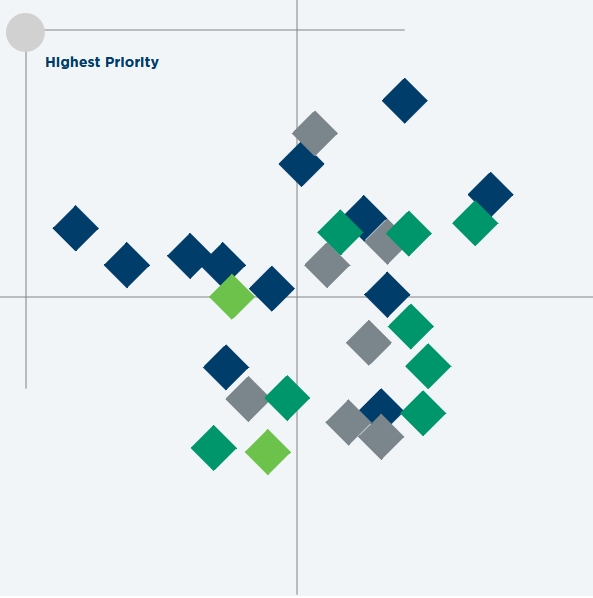
Data: The New Differentiator in Manufacturing Analytics. This West Monroe Consulting paper discusses how the growing plethora of data will impact manufacturing analytics processes. It calls for companies to begin managing data as through it were a corporate asset rather than an application specific asset. This change in approach will allow data that is needed for a specific purpose to be reapplied to other applications (current and future applications) to optimize the manufacturing and supply chain processes. Once this transfomation is begun, the available data will allow for new pricing strategys by supporting performance based pricing structures that could not have been imagined five years ago. When manufacturing business processes are enhaced with performance based data, businesses will begin to evolve away from product based pricing structures and move toward value-based pricing concepts..

Governmernt Data Management for the Digital Age. In today’s world, data drives everything. By their nature, government agencies have lots of data since the government support communities and touches everyone. However, government data is locked in silos, scattered, and virtually inaccessible for any use beyond the originally deployed application. Early efforts to make this data more accessible demonstrated the power of this data but did little harness the true value of the data for city operations. Cities need to adopt clear and meaniful data strategies that improve the efficiency and effectiveness of government operations. This has to start with a clearly stated vision for data use that is based on practical use cases while providing the necessary protections citizens demand. Such a vision statement should not be viewed statement of support for specific applications but as a platform statement that shows how data value can be maximized while minimizing data acqusition/sipport costs for both current and future application.

Top Trends in Big Data for 2025 and Beyond. At the begining of each year, the pundits all issue their view of the top tech trends that they expect to dominate the coming year. The TechTarget forcast of future tech trends is particularly interesting from the perspective that they called out AI as a top tech trend (like most other forecasts) but they also went a step beyond the norm to point out how the demand for AI systems will drive other issues that are prerequsites for a successful AI deployment. AI systems have been making great strides forward and offer significant benefits to the companies that deploy them. However these systems are consume massive amounts of data and the data infrastructure that enabled legacy software systems will need to be totally reconsidered before it can suitably serve the needs of this oncoming wave of AI deoplyments.

From Future Vision to Urban Reality. A ebook detailing research conducted by ThoughtLab covering efforts to deploy smart city concepts in the real world. Several success stories are outlined. Included in the coverage of the hurdles that neeed to be overcome as these systems evolved from a concept ito a deployed reality. One of the key take-aways is that smart organizations do not build to specific application but instead build to an operating model that supports many applications. By doing so, these organizations are creating a flexible structure that can accomodate current and future needs. While the research was conducted with a focus on smart city deployments, many of the same lessons can be applied commerical tech deployment projects as well.

There is No AI Without Data. This article from the Communications of the ACM outlines the challenges facing efforts to create a data infrastructure that is capable of supporting an organization’s AI drive their business practices. As AI deployments accelerate, organizations will find themseves with many different AI systems. Each AI system will be functionally targeted to improve specific business outcomes; each of these AI application will need subject structured sources of data. Between applications, some of the data will be generic and some will be subject-matter specific. This demand for data will create scalibility hurdles and increase the need for a cohseive data support structure within the AI driven organization.

AI: A Game-Changer for Cities. ThoughtLab, is a research group that examined the impact of technologies on companies, cities, industries, and business performance. Their survey results examine how cities are preparing to adopt AI technologies in order to enhance customer/citizen services, reduce operating costs, and improve overall quailty of life for its citizens. The uncovered indications suggest that AI will be initially be deployed in an effort to support current services but the expectation is that AI’s use will grow to become a strategic enabler of future services that would not be possible without AI. This vision assumes cities will be able to successfully navigate a path between technology potential and citizen concern about issues such as security, privacy, and control.

The Evolving Internet of Things (IoT) in Healthcare. The healthcare industry is in a technological crossroad where innovation in digital communication and Internet-of-Things (IoT) technologies are intersecting with health care communities. This intersection is changing the relationships between medical care providers, patients, health care systems, and the government. Doctors, hospitals, insurance companies, and other partners in the health ecosystem are evaluating the impact of these systems and devices in the complex milieu of administrative process, regulatory compliance, and clinical communications. The potential benefits of these systems are enormous but there is an increased risks which require increased control and management.
Concepts

What Does it Mean to be Data-Driven? An introductory article from Dataversity that discusses what it means for an organization to be data driven. The article focuses on the benefits for an organization to be data driven and the steps an organization an organization has to take in order to improve their data-driven orientation.

How Well is Data Fueling Your Company’s Digital Revolution? Doug Laney from Forbes, discusses the importance of data in fueling the Digital Revolution. Data is a corporate asset that needs to be actively managed for the benefit of the company like any other corporate asset. Doug’s research shows that many transformational projects fail to live up to expectations because data is treated as an cost center rather than a corporate asset. This viewpoint limits the corporation’s abilty to maximize its return on asset investments.

Rewiring Telecoms for Future Success Means Shifting to a Customer Focus. Communications Service Providers used to be in the business of providing what were largely commoditized connectivity services. That legacy mantra needs to change. New era communications companies are increasingly focused services that provide a higher margin; more specifically, services that make it easier for customers to manage the growing volumes of data that drive their business. These companies understand the need to use data to strengthen their customer relationships and are looking for service providers that can provide tools to make the data management process simplier.

The State of the Connected World: 2020 Edition. Late in 2020, the World Economic Forum released a report that focused on how IoT systems were transforming and disrupting the way we live and work. While it is clear that these technologies can provide significant benefit, there are outstanding obstacles that must be overcome before these technologies can achieve their true potential. i3 is cited a breakthrough pioneer in its efforts to create infrastructure tools that allow the growing number of data streams to be managed in a networked environment.

How AI Could Tackle City Problems Like Graffiti, Trash, and Fires. Video is the ultimate Internet of Things (IoT) sensor; a single video frame can be analyzed to determine the status of many situations. AI (object detection systems specifically) can analyze live video streams to identify objects and situations of interest. When such an object is detected, the systems can generate alerts for operators and triggers responses as needed. Recent AI advances make it easier to interpret these event sequences, while improvements in object recognition help accurately identify organization specific events that impact operational processes. In a smart city context, these situational event streams can drive timely actions that enhance municipal services and improve residents’ quality of life.
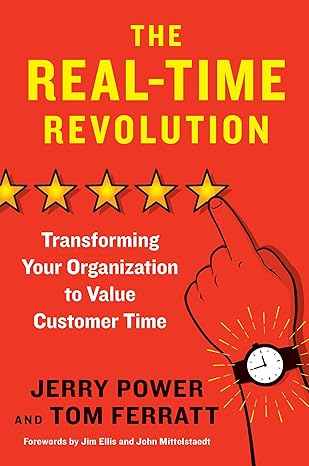
The Real-Time Revolution: Transforming Your Organization to Value Customer Time In today’s busy, distraction-filled world, customers value their time above all else — and businesses must do the same to survive. Companies that operate in real-time outperform competitors by being faster and more responsive to customer needs. To become a real-time organization, you need systems that continuously monitor and respond to how well your products or services save customers’ time. This book explains how to implement processes that gather data on time-saving performance, identify strengths, weaknesses, risks, and opportunities, and pinpoint innovations to save even more customer time. This focus on using technology to understand and optimize how both customers and companies spend their time inspired the development of the i3 concept.

Privacy and Secuity Audit Issues. For an organization to manage their data resources, they need to know where those resouces are and how they are being used. Indeed, regulators often assume that the organization has accurate infomation about the data assets that come into a company, how new data assets are generated, how they are used by the company, and when data is used outside the company. However, data is fluid and even if a company has a handle on its data assets, these assets could easily change tomorrow. Therefore it is important that a company periodically audit its inventory of data assets. The referenced paper contains a compilation of best practices that an organization can use during an audit process that examines the company’s data assets and their use.
Operations

Data Classification Can Make or Break Data Governance. Data governance refers to the processes an organization uses to manage their data. Data policies that use protection system to safe guard sensitive data is an understood data governance process but data governance is much more than data security. Other issues like data retention policies, auditng data distribution and use within the organization, and back-up/recovery processes processes are other data governance issues. Properly constructed, data governence policies provide foundational support for the organization’s operations yet they are often mis-understood and mis-communicated. A sound data governance policy has to begin with an inventory of the organization’s data assets and then has to classify the available so that policies can be applied consistently across the data class.

State Data-Maturity Assessment. Geogetown University’s Beeck Center for Social Impact published a data-maturity assessment tool for called the “State Data-Maturity Assessment.” The assessment tool was developed as part of a larger effort in assist management in evaluating their organizations readiness for future data-driven evolitionary growth. While originally developed with state governments in mind, the tool is equally useful for any organization that must manage and oversee large volumes of data in order to maximize the benefit derived from these assets.

The Strategic Importance of Application Integration. An Overview of Application Integration Proceses with a focus on the growing importance of these processes. A new generation of Applications are emerging that required increased access to data that is managed outside the application’s environment. Tools needed to support this role go well beyond the legacy concept of building rigid links between applications and instead support the creating of a network of applications that allow data streams to be actively managed for a cohesive operating environment that spans across organizational divides.
The Application Integration Process. Application integration programs link two or more disparate applications together. This allows applications to share data and other intelligence between applications, thereby breaking down the application silos that compartmentalize departments based on technology. This paper provides some getting started guidelines that should be considered whenever an application integration program is started.

Building a Data marketplace: 6 Fundamental Principles of The CTM i3 Platform. Reflections on the evolution of the i3 concept that was originally envisioned at University of Southern California (USC) including an overview of lessons learned along the way. The experiences that emerged from this three year research project shaped the efforts that drove i3 Systems to create an industrialized implementation of these systems that could be deployed by smart cities, smart communities, and indeed any ecosystem that seeks to increase the value of the data being managed in a federated operation environment.

Trust in Smart City Systems This reference document from the Cybersecurity & Infrastructure Security Agency highlights the crucial role of trust in the success of smart city projects. It outlines nine key trust characteristics that should be considered during the planning phase of any new smart city initiative. Trust is especially important in cooperative data infrastructures, where the departments generating data streams are often separate from those consuming them. Without a solid foundation of trust, data providers may hesitate to share their data with the wider community, and data consumers may be reluctant to use data when its reliability is uncertain. While the material was developed in a smart-city context, its findings apply to any large data ecosystem environment (commerical and governmental).
IoT Marketplace: A data and API market for IoT Devices. Adoption of the Internet of Things (IoT) in smart communities and cities faces many challenges, such as interoperability issues, fears of vendor lock-in, economic limitations, and privacy concerns. A flexible architecture that smoothly manages data flow between IoT devices and applications enhances the manageability of systems within community-focused infrastructures becomes critical as the volume of data managed increases. Data marketplaces, provide the trust and coordination needed to support the exchange of data much like credit card companies support the purchase of products over the internet.
The Intelligent IoT Integrator (i3) Project: Working Together. This brief history traces the i3 project from its origins as an academic research program at the University of Southern California (USC) to its evolution into a multi-stakeholder system. The orignal project produced open-source proof-of-concept software that showcased the power of leveraging data across organizational divides. From this foundation, i3 Systems was created to advance the development of real-time data systems more broadly—bringing these concepts into practical, operational environments.
Documentation

i3 Overview. This overview of the i3 information network architecture. The i3 system offers several features that make it especially well-suited for federated environments, where operational responsibilities can be assigned to specialized internal teams, outsourced groups, or partner organizations. Another key feature of the architecture is its approach to distributed data flow management. Rather than relying solely on an already busy IT department to manage all data distribution, the IT team sets up the overall framework, while data owners closest to the source take direct control of managing their data’s distribution.

i3 Systems Operational Concepts. This paper provides an overview of key operational concepts essential for understanding, implementing, and deploying an i3 information network. The i3 system organizes operational tasks into functional categories that can be assigned to different teams within the organization. This approach allows IT specialists to focus on building a data distribution environment that aligns with organizational goals, while day-to-day data management and operational tasks are handled by data owners and data consumers.
Hello World Device Wrapper. This paper introduces the concept of i3 device wrappers. In complex data processing environments, many data sources produce data in unique formats. Device wrappers are code modules that can accept data in various formats and map it to a standardized, organization-specific data model. These wrappers become the basis for basis for automating organizational specific automation responses handling device specific response scenarios and information model specific responses.

i3 Application Wrapper. This paper introduces the concept of i3 application wrappers. In complex data processing environments, many data-consuming applications expect data in their own unique formats. Application wrappers are code modules that take data based on the organization’s internal data model and transform it into the specific formats and structures required by each application’s API. The application wrapper model allows a single common information model to drive multiple applications with their own specific data flows.
i3 Edge Processing. i3 has developed an edge processing system designed to support remote devices and application wrappers that feed data into the i3 core information network. What sets the i3 edge processor apart is its ability to collect data from a variety of Internet of Things (IoT) devices as well as IP-based video cameras. By moving these message processing functions close to the data generating devices, communications overhead can be minimized and response times are imroved. As an example, for video streams the i3 edge supports a configurable object detection process that can be configured to support full time video transmission OR it can be configured to only alert on situations of specific interest to the operator.

i3 SDK (Software Development Kit). While i3 can easily and seamlessly distribute data to multiple applications or users, high levels of data reuse often require transforming incoming data into formats that match the target applications’ expectations or that match the organization’s internal information model. To simplify the process of transforming device specific messages into a targeted information environment, i3 Systems has developed a data transformation tool that makes it easy to create automated translational data wrappers. These tools held developers integrate i3 smoothly into existing data processing environments.